Clayface - Movie Review
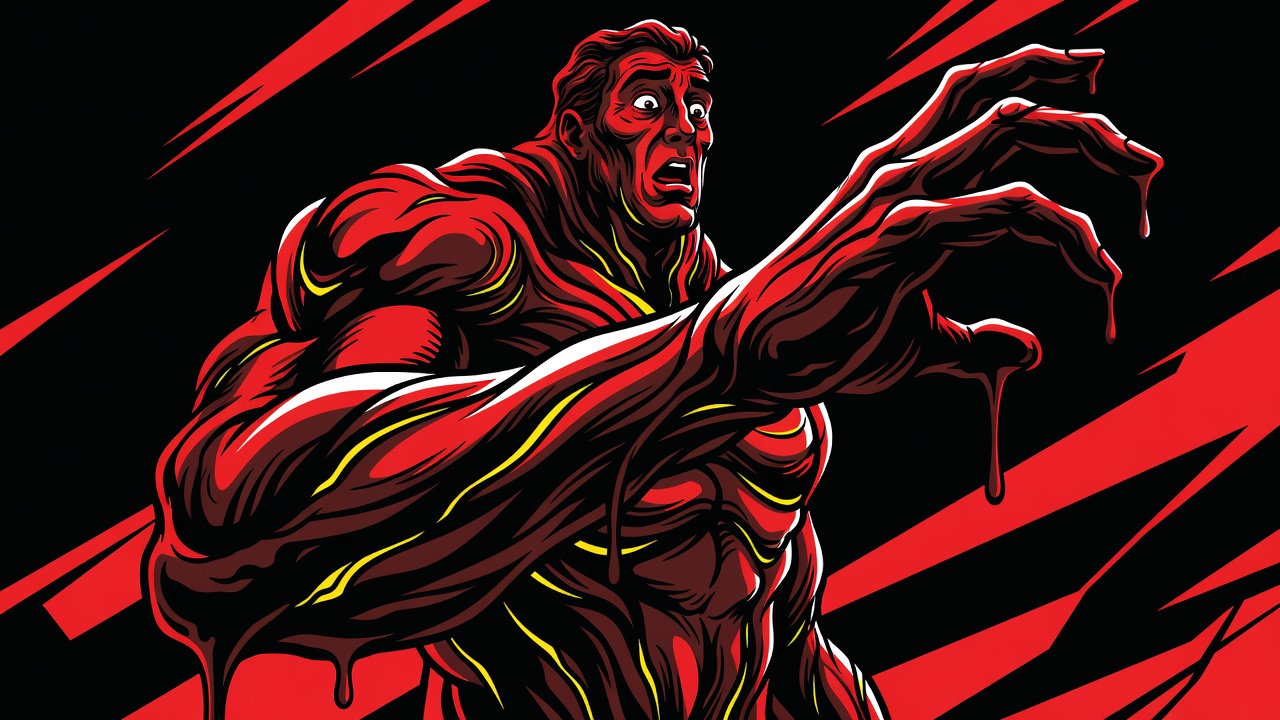
Clayface is another Batman villain origin story with no Batman in it, which is becoming a very specific DC tradition. The difference is that this time, the villain is Matt Hagen, a rising actor whose face gets carved up by criminals before an experimental nanobot substance puts him back together.
It also starts melting him.
That is a pretty good setup. Matt loses his face, his career, and his life as he knows it. Then he gets a miracle cure with some unfortunate firmware problems. Soon he can change his appearance, reshape his body, and turn his hand into an enormous spiked mace.
The catch is that he is slowly losing control of himself.
That should be enough for a nasty little Gotham body-horror movie. Unfortunately, Clayface keeps wandering away from its best ideas.
The actor behind the monster
Tom Rhys Harries does more with Matt Hagen than I expected. The character could have been nothing more than a handsome actor who loses his face and starts murdering people with liquid skin. Instead, Harries gives him a boyish charm and an underlying insecurity that makes the early version of Matt easy to like.
He is successful, but he does not seem to believe he belongs in the room. That makes his transformation more interesting. He is not just trying to restore his appearance. He is trying to get back the life he thinks was stolen from him.
The movie understands that Clayface being an actor is useful. Matt is already someone who changes himself for a living. He performs confidence, romance, menace, and sincerity. Then the serum turns that metaphor into a physical problem. Who is the real Matt Hagen when his face can become anyone’s?
That is the strongest material in the movie, and Harries carries it.
The film also avoids making Matt too innocent. There is a temptation with villain origin stories to turn every bad guy into a misunderstood antihero. The movie wants us to enjoy Matt’s revenge, but it does not completely excuse what he becomes. By the end, if Batman eventually shows up to put him down, Batman would have a point.
That is refreshing. A villain can have a tragic backstory without becoming morally correct.
The body horror is better when it is cheap
The best effects in Clayface are often the ones the movie does not show.
When Matt’s hand becomes that iconic mace, we mostly get the shadow on the wall. When he changes into another person, the movie sometimes lets a character look away, look back, and discover that Matt is someone else.
That low-budget horror approach works. It leaves room for the audience to imagine what happened. It also keeps the film from turning into a parade of expensive CGI morphs that would make the character look like a video-game cutscene.
There are flashes of real body horror here. Matt’s face melts at the wrong time. His body refuses to obey him. The serum gives him power, but every new ability comes with the possibility that his humanity is being dissolved along with his skin.
That is the movie I wanted more of.
Instead, Clayface occasionally mistakes gore for horror. A melting face is an image. The horror comes from what that image means to the person experiencing it. The film gets there sometimes, then wanders off into another revenge scene or a piece of forced relationship drama.
And when Matt transforms, I wanted something more than a visual cut. Give me a sound. Give me a disgusting wet crack. Give me the full Shang Tsung-style transformation noise. The movie needed to make these changes feel like events, not simple editing tricks.
Batman is apparently taking a personal day
The strangest part of Clayface is the insistence that Batman exists somewhere nearby but never appears.
I understand the logic. DC wants these movies to share a universe. Batman is operating during the events of Clayface, even though he never investigates the mobsters being murdered, the experimental substance, or the man turning into a walking crime scene.
So what is he doing?
Is Batman on vacation? Is this his day off? Did he tell Robin to handle the Gotham body horror while he catches up on paperwork?
The movie would be cleaner if it simply let Clayface’s story happen without reminding us that Batman is supposedly out there. If Batman is part of the world, fine. We do not need the film to keep waving at him from behind the curtain.
The absence becomes especially noticeable because this is a Gotham story without much of Gotham’s larger identity. There is no Jim Gordon, no meaningful Batman connection, and no sense that the city’s usual machinery is responding to what is happening. The result feels less like a chapter in a Batman world and more like a standalone horror film that has been told to leave a chair open for Batman.
The romance and the revenge
The relationship between Matt and the doctor who created the formula never convinced me. She is already engaged to a decent cop, which puts the movie in the awkward position of asking us to care about a love triangle involving a murderer, a scientist, and the one apparently competent officer in the GCPD.
There is material for a good conflict there. The doctor knows what the formula can do. Matt needs her help. The cop sees what Matt is becoming. But the romantic angle mostly feels like something the screenplay added because it thought the movie needed another emotional track.
It did not.
The revenge plot is the same way. It gives Matt a reason to keep moving, but it does not always give the audience a reason to care about the next target. The film wants his revenge to feel cathartic, yet the individual confrontations can be oddly weightless. By the time the story reaches its conclusion, the whole quest has less punch than it should.
There are also some dialogue choices that made me wince. When Matt announces, "I'm coming for them and hell's coming with me," I immediately thought of Tombstone. I can accept that Matt is a movie fan who quotes famous lines when he wants to sound intimidating. That actually fits the character. But the movie does not always make the joke clear enough, so the lines land like accidental plagiarism instead of deliberate characterization.
Final take
I enjoyed Clayface, but I did not love it.
Tom Rhys Harries gives the movie a likable center, and the body-horror premise has enough juice to carry a much nastier film. The low-budget approach to Clayface’s powers works more often than it does not. There are good ideas here about identity, performance, vanity, and the danger of becoming too comfortable with a new body.
But the pacing drags. The romance feels unnecessary. The revenge story never fully catches fire. The third act does not deliver the impact the setup promises. At around fifteen or twenty minutes shorter, this would have had a much cleaner pulse.
Clayface is part The Fly, part Hollow Man, and part actor’s identity crisis with a comic-book mask on top. It is not empty. It is not a disaster. It is simply a decent horror movie that keeps reminding you it could have been a great one.
Remember: a villain origin story does not need to make the villain innocent. It just needs to make the transformation hurt.
Subscribe to Game Pilled: https://www.youtube.com/@GamePilledBlog
Join the Based New Wave!