Everest: The Other Side - Movie Review
There are difficult documentaries, and then there are documentaries about people who voluntarily make life difficult for themselves at 26,000 feet.
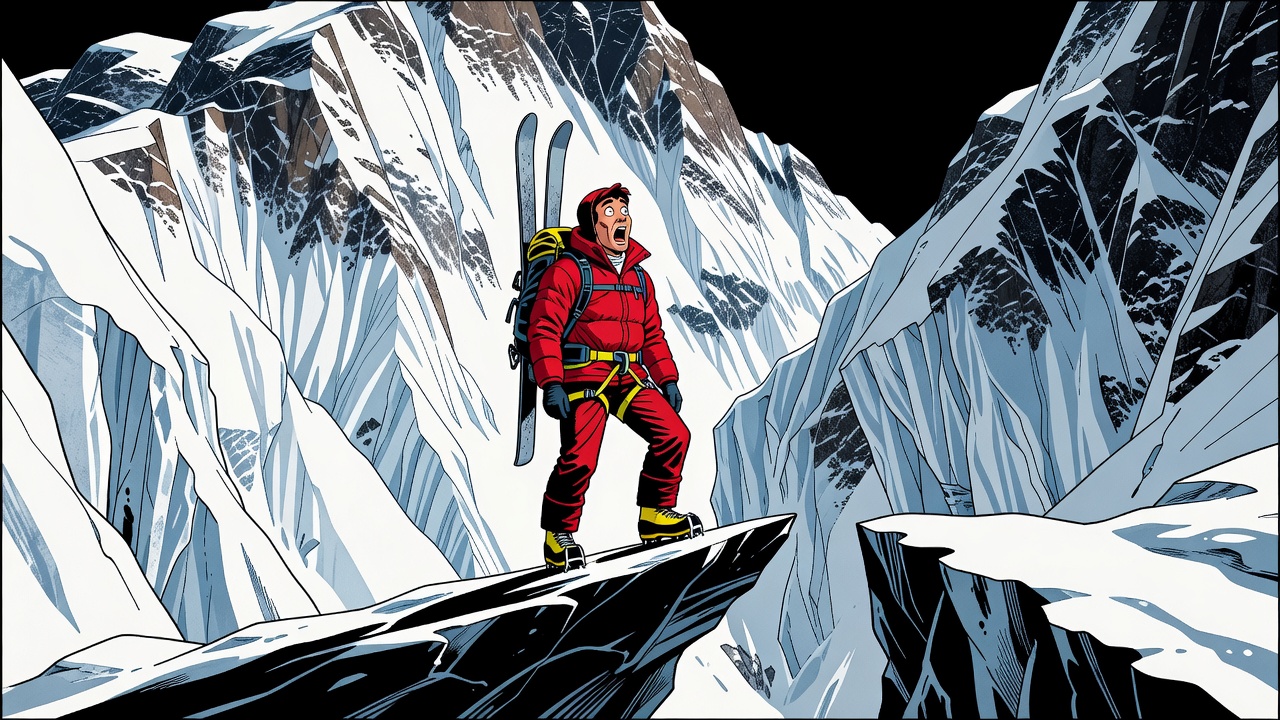
Everest: The Other Side follows climber Jim Morrison as he attempts to reach the summit of Mount Everest from the North Face and ski back down. Because apparently getting to the top of Everest wasn’t already enough. The man looked at one of the most dangerous things a human being can do and decided it needed an extra phase.
That is a terrific premise. It also raises the obvious question: why?
The North Face Problem
Thousands of people have reached the top of Mount Everest, but the North Face is a different proposition altogether. At the time covered by the documentary, only a handful of climbers had managed to summit from that side.
So Morrison isn’t simply climbing the world’s tallest mountain. He’s choosing the harder route and then adding a downhill skiing attempt after reaching the summit. It’s like winning a gold medal and immediately asking if anyone has a platinum one.
The documentary understands the appeal of the feat. There is something inherently fascinating about people who look at an almost impossible challenge and feel personally offended by the idea that it might remain impossible. They have an itch. They need to scratch it, even when the scratching involves thin air, unstable weather, exhaustion, and a mountain covered in corpses.
What the film doesn’t always do is dig into Morrison’s motivation with the same precision it brings to the climb itself.
The Human Story Gets There Eventually
The film does reveal tragedies in Morrison’s life that help explain why he would devote himself to something this extreme. Once you know what he has been through, his obsession becomes easier to understand.
Not easy. Just easier.
There’s still a part of me watching this thinking, “Reaching the top of Everest should probably be enough.” But the personal history gives the expedition more emotional weight than a simple adventure story about a guy who wants to do something dangerous because he can.
The problem is that the film doesn’t always present this material in the most effective order. One major revelation arrives almost as an afterthought, as if the documentary suddenly remembers that viewers should probably know about it before the credits roll. By the time that information appears, the emotional opportunity has already passed.
That is a shame because the event is clearly important. The film simply doesn’t give it enough room to land.
Beautiful Enough to Make You Feel Cold
Where Everest: The Other Side absolutely delivers is the photography.
The aerial footage of Mount Everest is spectacular. Modern drone technology has changed what documentaries can show us, and this film makes full use of it. There are shots where the mountain stops looking like a place on Earth and starts looking like the background to an expensive science-fiction movie.
The scale is ridiculous. The ridges, cliffs, snowfields, and shadows make the climbers look less like heroes conquering nature and more like tiny figures who have wandered into the wrong planet.
That visual perspective matters. You understand the danger intellectually when someone talks about altitude, weather, or the death zone. Then the camera pulls back and shows you the mountain swallowing the frame. Suddenly the whole enterprise looks even more insane.
It’s also the best cinematic look at Everest I can remember seeing in a documentary. If you have the chance to watch this on a large screen, do it. The mountain footage deserves the space.
Although, fair warning: I have never felt colder in a movie theater.
I couldn’t tell whether my brain was reacting to the footage or whether the theater had cranked up the air conditioning as a practical effect. Every time the film showed another blizzard or frozen ridge, I felt like I should be wearing three jackets.
The Missing Context
The documentary’s biggest weakness is that it assumes you already understand Everest documentaries.
It gestures toward the hardships of the climb, unexpected weather, and the brutal conditions facing the team. But it doesn’t spend much time explaining the death zone, where the human body can no longer get enough oxygen to sustain itself.
That information is important because it changes the way you view the expedition. The clock is always ticking on a climb, but once the climbers enter that altitude, the clock becomes the story. Every minute matters.
Without that context, the film occasionally becomes a beautiful collection of people doing something dangerous. You can see the risk, but the movie doesn’t always explain the full cost of it.
That also creates a strange effect with the skiing objective. By the time Morrison reaches the summit, getting there already feels like an unbelievable accomplishment. The ski descent almost becomes secondary. You can briefly lose sight of the fact that this was the entire point of the expedition.
The movie gets to the top of Everest and somehow makes the top of Everest feel like the warm-up.
Final Take
Everest: The Other Side is visually stunning, immersive, and built around one of the most naturally compelling premises a documentary could have. It gives you a mountain that looks alien and a climber whose determination is difficult to comprehend, even after the film explains where some of that drive comes from.
But the personal story is unevenly constructed, and the documentary leaves too much of the Everest context for the audience to supply from other films, books, or survival stories. It wants the emotional power of Morrison’s history without always taking the time to properly build it.
Still, I had a good time with it.
I enjoy watching people pursue these absurd, dangerous goals because I want to understand what makes them tick. I also enjoy being reminded that there are people in the world who can do things I absolutely cannot do. Reaching the summit of Everest is one of those things. Skiing down afterward is where I start questioning the entire species.
My verdict: See it for the mountain footage, stay for the human story, and remember that sometimes reaching the top should be enough.
Subscribe to Game Pilled: https://www.youtube.com/@GamePilledBlog
Join the Based New Wave!