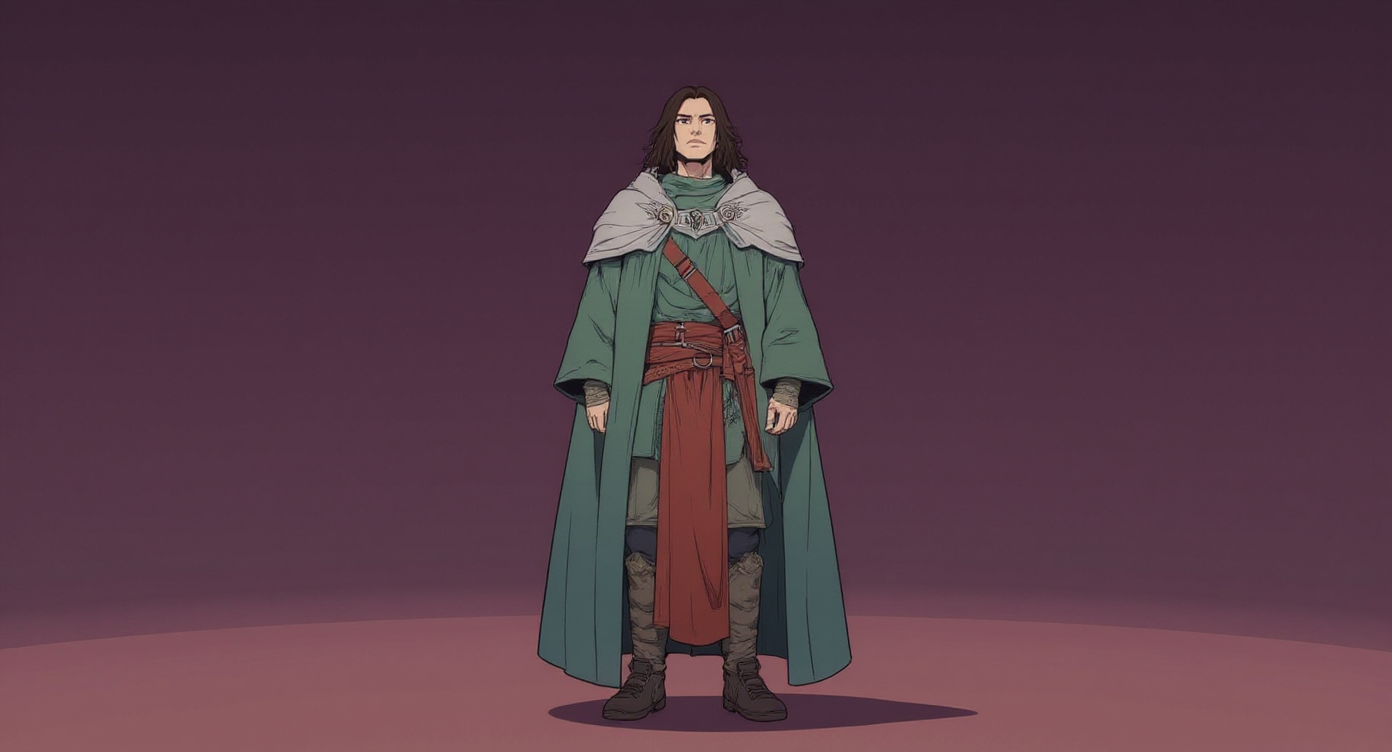
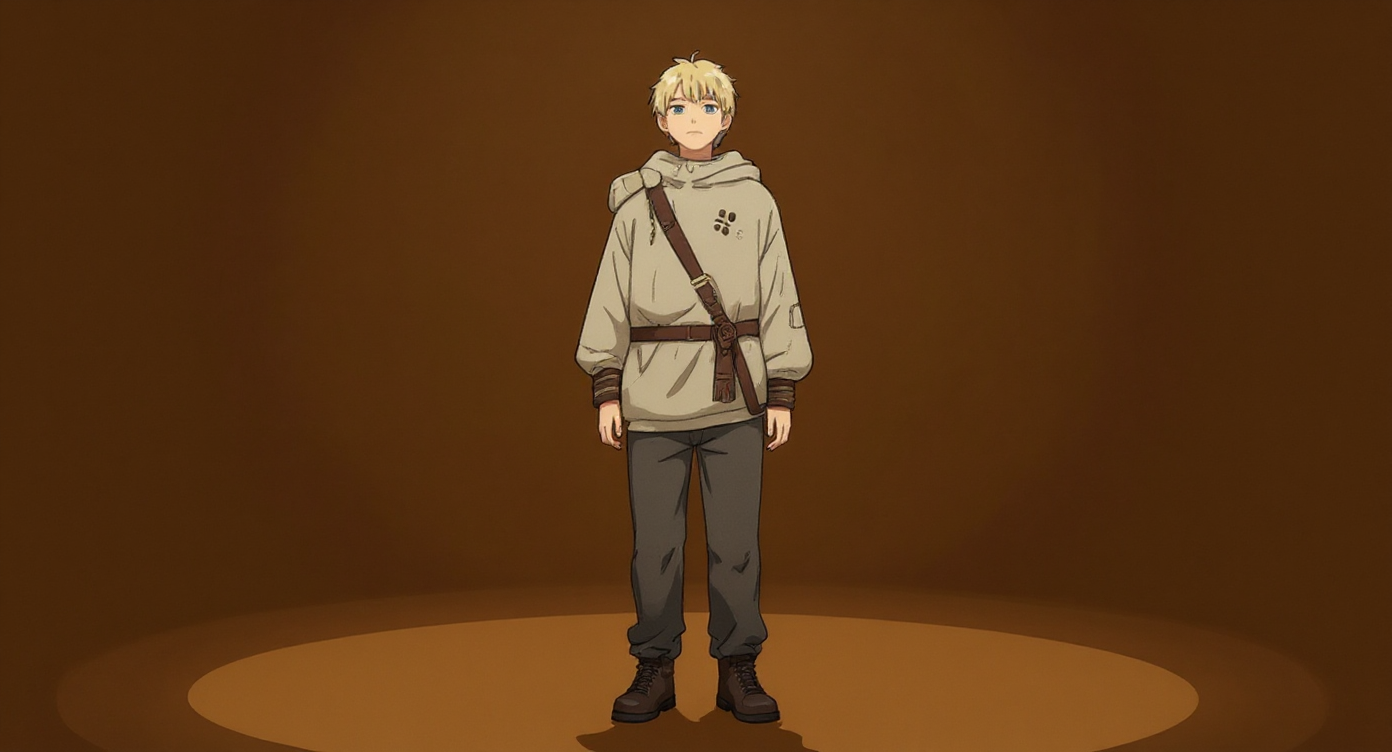
In Vinland Saga, Thorfinn’s greatest victory comes not with a blade but with perfect stillness. During the Farm Arc, the former killer stands unarmed and takes one hundred punches to reach King Canute and stop more bloodshed. This moment embodies the Stoic concept of moral progress taught by Hierocles: the deliberate movement from vice toward virtue through repeated, difficult choices when the old self is still available to strike back.
The Boy Who Needed Enemies
Young Thorfinn’s entire identity rested on revenge. After his father Thors was murdered through treachery, the boy attached himself to Askeladd, the man responsible. He fought in battle after battle, not for glory or loyalty, but to keep the chance of killing his enemy within reach. Every skill he developed served a single destructive purpose.
This narrow focus made him fast, lethal, and empty. Revenge gave his suffering structure, but it consumed any space where a fuller life could grow. When Askeladd died by another man’s hand, the structure collapsed. The enemy was gone, yet the identity built around hatred remained. Thorfinn had become powerful in the narrowest possible sense, and now he had nothing left.
Slavery, Dreams, and the First Real Change
Sold into slavery, Thorfinn arrives at Ketil’s farm. There he works the land beside Einar, a young man who also carries deep grief from violence. The days are brutal and repetitive: digging, hauling, exhaustion, silence. At night the dead visit him in dreams. The violence he once saw as heroic now appears as a pit of bodies, and he is still falling into it.
This is where moral progress begins. Hierocles taught that character does not improve by wishing or by the sudden disappearance of vice. It improves through action, especially when the old impulses are still present. Thorfinn does not forget his past. Instead, he stops defending it. He sees clearly what his strength had truly served, and he makes a new vow: he will have no enemies.
The vow is not naive. The world remains dangerous. The difference is that Thorfinn will no longer manufacture enemies to justify surrendering his own judgment.
The Test: One Hundred Punches
Canute’s army overruns the farm. Thorfinn asks to speak with the king to negotiate peace and prevent further slaughter. The price is steep. He must first endure one hundred punches from Drott, the massive warrior known as the Bear Slayer. The soldiers gather for entertainment. Wulf watches with curiosity. Einar fears his friend will die or revert to the killer he once was.
If Thorfinn strikes back, he becomes the man he is trying to leave behind and loses any chance at peace. If he falls before the hundredth blow, the farm falls with no voice for restraint. His body is the only bridge left between violence and negotiation.
The punches begin. At the thirty-second blow, Thorfinn is knocked flat. The soldiers laugh. A warrior who refuses to fight must be weak. But he stands. He mocks the quality of the punches, not out of pride, but to show that he has already chosen what his strength is for. The remaining blows land with full force. Blood runs. His legs shake. Each strike offers the same old temptation: return to the person who answered every wound with death.
He keeps standing. After the final punch, Drott kneels and calls him a true warrior. Thorfinn, bloodied and barely upright, simply says he came to negotiate and that these men are strangers to him. He has no enemies.
What Hierocles Understood About Progress
Hierocles described moral progress as visible movement from vice toward virtue. The measure is not the complete absence of anger or old habits, but whether we still obey them when they rise. Thorfinn’s transformation proves the point. The boy who lived to kill Askeladd now wins by mastering himself. True strength appears in the decision to refuse the identity that once felt necessary.
This is not weakness wearing virtue’s clothes. It is strength stripped of vanity. The old Thorfinn needed an enemy to know who he was. The new Thorfinn can stand without one.
A Practical Takeaway
Look for your own version of the hundred punches. When anger arrives with a convenient target, when pride demands you prove something, or when the past offers you another chance to be the person you no longer want to be, that is the test. Moral progress is not dramatic perfection. It is choosing restraint, responsibility, and clarity one difficult moment at a time.
You do not need the world to become harmless. You only need to stop manufacturing enemies as an excuse to surrender your judgment. Stand up after the blow. Keep your aim on peace instead of performance. The past explains why you became dangerous. It does not get to decide what you become next.
The highest form of victory is not defeating an enemy. It is defeating the part of yourself that still needs them.
Adapted from the Anime Stoic episode How Thorfinn Became Strong Without Revenge | Moral Progress.