I’ll just say it: this movie opens with an evil little grin and dares you to grin back.
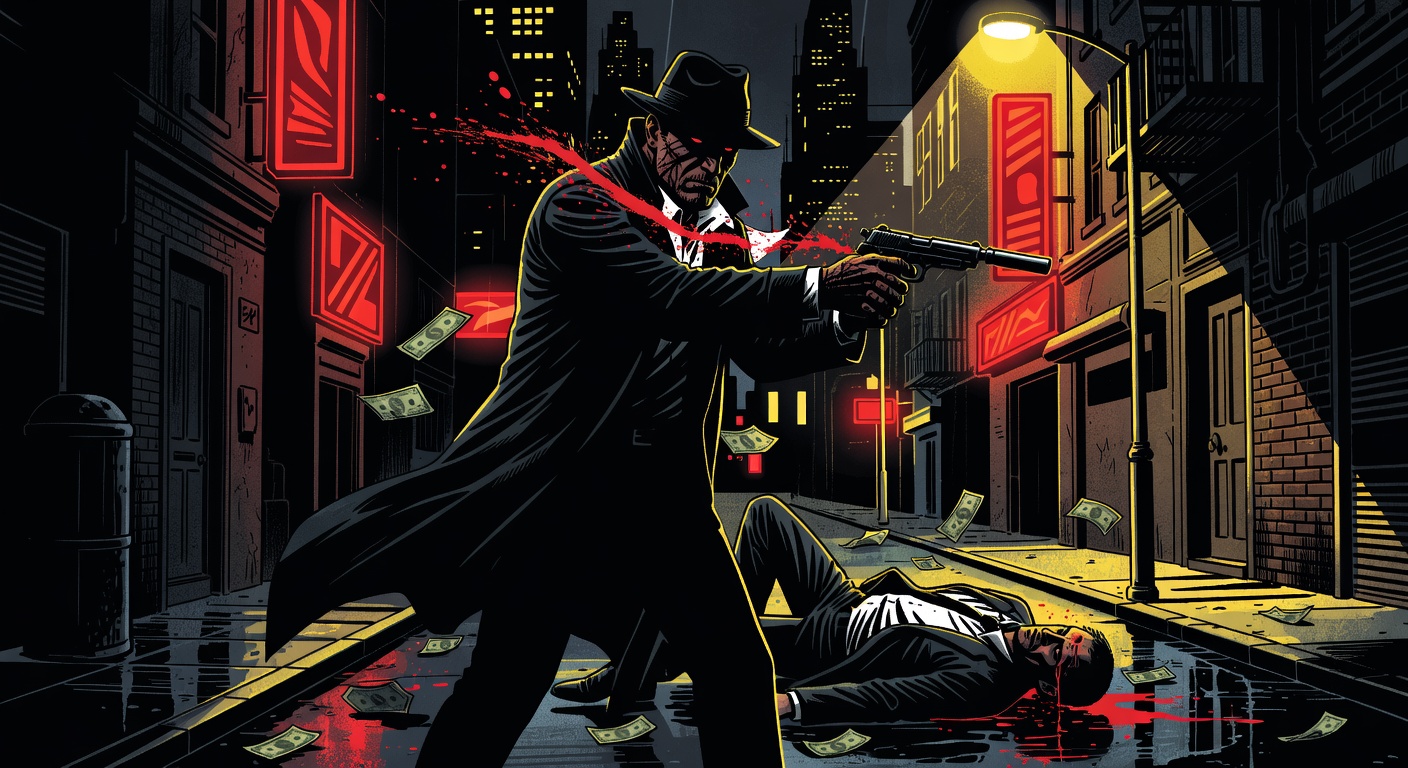
The setup is pure forbidden candy. A guy from a mega-rich family branch gets pushed out of the inner circle, then realizes he’s still in line for obscene money—if enough relatives happen to stop breathing first. That’s not exactly heroic material, and the film knows it. It’s not asking you to admire him. It’s asking if you’ll follow him anyway.
Most of the time, I did.
What happened
At its core, this is a modern inheritance-kill satire wearing a thriller jacket. Glen Powell plays the heir-adjacent outsider who goes from “that would be crazy” to “let’s map this out” faster than any sane person should. The first death comes easy. After that, he has to get methodical, and the movie gets its best fuel from watching him become competent at something no one should be competent at.
Tonally, it’s a dark comedy first and a morality tale second. The kills aren’t played like prestige true crime. They’re played with twisted irony, class contempt, and enough social acidity to keep the thing from becoming just another “charming psycho” vanity project.
And yes, some of the relatives are so grotesquely awful you can feel the script trying to seduce you into cheering their exits. Sometimes that works. Sometimes it feels like a screenwriter’s shortcut: make everyone above him in the will chain cartoonishly insufferable so the audience doesn’t revolt.
Performances: the movie’s strongest weapon
Glen Powell has a weird career aura right now. Half the internet treats him like a studio-manufactured heartthrob. The other half sees a real movie star with old-school screen command. In this one, he lands on the right side of that argument. He’s got timing, he knows when to underplay, and he sells the character’s slippery moral descent without turning it into melodrama.
He also has the exact kind of confidence this role needs: enough charm to keep us watching, enough coldness to keep us uneasy.
Margaret Qualley brings volatile femme-fatale energy and keeps scenes alive even when the script isn’t giving her enough connective tissue. Early on, her character feels less like a person and more like a narrative accelerant. Later, she does slot into the machinery in a way that justifies her presence more cleanly.
Jessica Henwick, though, is the emotional anchor. Her character introduces the one thing this protagonist can’t price-tag: a real life outside the inheritance bloodsport. Once that relationship is in play, the movie quietly shifts from “how far will he go for money?” to “why is he still doing this when a better life is right there?” That tension gives the back half actual weight.
Why it matters
Dark comedies live or die on moral friction. If the audience feels nothing, you’ve made empty provocation. If the audience feels preached at, you’ve made homework. This one mostly finds the sweet spot: I laughed, winced, and occasionally had that “wait, am I rooting for this guy?” self-check.
That’s the point. The movie isn’t trying to launder murder into righteousness. It’s showing how greed reframes evil as logistics. Every time the protagonist gets away with something, he doesn’t just gain confidence—he loses vocabulary for restraint.
There’s also a class venom running underneath everything. The family wealth isn’t just money; it’s immunity, legacy, access, and a social force field. By turning inheritance politics into a body count, the film pokes at an uncomfortable truth: in elite circles, brutal behavior is often tolerated as long as it stays administratively clean.
The biggest flaw (and it’s not close)
The film’s clearest weakness is temporal coherence. The passage of time is handled so poorly that key developments feel unearned.
Characters reference events from “last year,” career advancement implies substantial time movement, and murder pacing would logically require spacing to avoid immediate suspicion—yet what we see onscreen often feels like two chaotic weeks in the same weather system. That disconnect matters because this plot depends on escalation over time. If time feels fake, the transformation feels fake.
You don’t need giant title cards every ten minutes. But give me seasonal cues, visual drift, wardrobe evolution, anything. A story like this needs temporal texture. Without it, the film occasionally feels like it’s cutting between draft versions instead of scenes.
This is also why some viewers are bouncing off the writing online. I get it. The premise promises a tight mechanism, and the execution can feel loose, even ramshackle in places. The bones are strong. The joints are not.
What the online reaction gets right (and wrong)
The buzz has been low-volume and split, which honestly tracks with the movie itself. The harshest criticisms—predictability, plot holes, uneven writing—aren’t invented. There are stretches where the script coasts on concept and charisma instead of precision.
But the praise isn’t cope either. Glen Powell does carry this thing. And when the film leans into black-comic cruelty with discipline, it’s a genuinely fun ride. Messy fun is still fun.
If you need airtight plotting and moral comfort, this won’t be your movie. If you can tolerate some structural wobble for tone, performance, and nasty humor, you’ll likely have a good time.
Final take
I walked out entertained, conflicted, and mildly annoyed—and for this genre, that’s not a bad outcome.
How To Make A Killing is dark, witty, and mean in the right ways. It also leaves obvious craftsmanship points on the table. A cleaner timeline and a few less convenient script leaps could’ve turned this from “good, flawed watch” into “must-see dark comedy.”
As it stands, I still recommend it—with caveats.
Verdict: 7.5/10.
Great premise, strong lead, sharp tone, messy scaffolding.
Remember: if your movie asks us to root for a monster, the writing has to be smarter than the monster. This one gets there often enough to be worth the ticket.
Subscribe to Game Pilled: https://www.youtube.com/@GamePilledBlog
Join the Based New Wave!