Sponsored note: This review is attached to a Sony campaign for its new True RGB TVs. If you want the hardware details, check the sponsor link from the original video description. The movie opinions here are mine.
The Backrooms was always going to face a nasty adaptation problem.
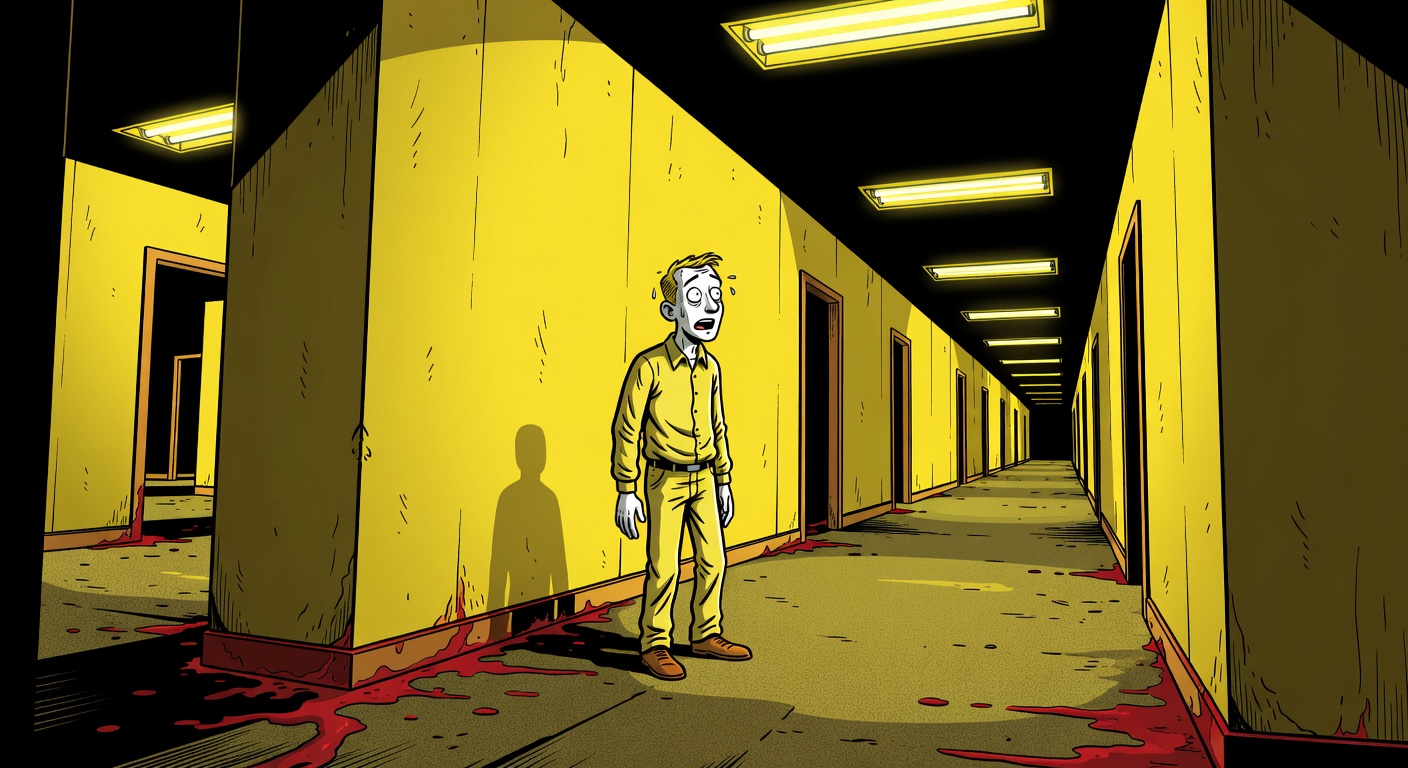
As internet horror, it works because it feels half-glimpsed and slightly stupid in a way that becomes unnerving if you sit with it long enough. Endless office carpeting. Sickly yellow light. Rooms that look familiar but wrong. It is modern folklore built out of bad architecture and dead air. That is a real vibe. It gets under your skin.
But turning that vibe into a feature-length movie is harder than it sounds. Atmosphere can carry a short. A full movie needs atmosphere and momentum. It needs dread, sure, but it also needs a reason to keep escalating beyond "what if the hallway kept going?"
Kane Parsons, who did so much to popularize the Backrooms as a visual language online, clearly understands the first part. This movie knows how to make a space feel hostile. It knows how to make a room look diseased without slathering everything in obvious CGI slime. It knows that emptiness can be threatening when the frame holds just a little too long.
And for a while, that is enough.
The movie follows a store owner who stumbles into this malignant side-pocket of reality and starts trying to make sense of it. "Trying" is the key word. This is not a mythology-heavy lore dump, and thank God for that. The film is stronger when it lets the place remain wrong on its own terms. The Backrooms here feel less like an alternate universe and more like reality growing a tumor. Random objects appear the way a body can grow something it has no business growing. There is no elegance to it. No fantasy poetry. Just useless things, warped space, and the ugly suggestion that the world itself has started misfiring.
That part works.
It also helps that the cast is doing real work. Chiwetel Ejiofor is one of those actors who can make a scene feel grounded even when the script is wavering. He shows up with the kind of presence that keeps nonsense from collapsing into parody. Renate Reinsve is good too, even if the movie does not always give her enough to play beyond fragments and implications. More than once, I had the feeling the actors were carrying the material uphill rather than the material carrying them.
That becomes the movie's central problem.
Parsons has a genuine eye for unnerving images and spatial dread, but the script does not always know what to do once it has you there. Some scenes have the hypnotic pull you want from this premise. Others just keep walking down the same corridor, dramatically speaking. I could feel the movie sliding from slow-burn into plain old slow.
The found-footage-adjacent material is where it comes alive the most. Those scenes have snap. They have rhythm. The camera whips, settles, catches something maybe changed, maybe not, and suddenly your brain is doing the work horror needs your brain to do. You start scanning corners. You start distrusting the frame. The movie becomes tense in a clean, immediate way.
That makes sense. Parsons came out of internet horror grammar, and you can feel his instincts locking in once the movie leans closer to that language. The camcorder-era texture helps too. There is something about older recording formats that makes horror feel less curated and more contaminated. The image itself seems vulnerable.
Outside those stretches, the movie gets shakier. Not visually shaky. Dramatically shaky.
There are dialogue scenes that do not sound like people talking under pressure so much as a screenplay trying to explain itself while standing in a haunted office park. One especially heavy emotional beat lands with a thud because the writing reaches for a big, ugly revelation without earning the human texture around it. I do not mind horror getting blunt. I do mind it getting cartoonish when it thinks it is being raw.
Oddly, the movie is also pretty funny.
I do not mean "so bad it was funny." I mean Parsons seems to have a real feel for deadpan absurdity and awkward release. There are moments where the audience laughs exactly when it should. I laughed. The room laughed. A couple beats are still rattling around in my head because they hit with actual comic timing.
That may be the most interesting thing about the movie besides the premise itself. Parsons might have a dark-comedy streak that is stronger than he realizes. Even here, in a film mostly built on liminal dread, some of the sharpest moments come from how bizarre and humiliating this nightmare can feel rather than how traditionally scary it is.
That does create a tradeoff, though. Backrooms is more interesting than frightening.
I was engaged. I was curious. I was claustrophobic in spots. I was rarely scared.
If you are walking in hoping for full-body panic, I do not think this gets there. If your particular fear is endless hostile space, malfunctioning reality, or being trapped in a place that feels like it was designed by a depressed regional manager, you will probably have a better time than I did. The movie absolutely knows how to make a location feel spiritually rancid. It just does not always know how to turn that into sustained terror.
The runtime does not help. At around an hour and forty-five minutes, this thing feels overstretched. There is a tighter, meaner version of this movie that lands harder at ninety minutes. Maybe even less. The final stretch in particular has the energy of a film trying to bolt on one more dramatic shape after the essential experience has already peaked. It is not disastrous, but it does feel slightly misweighted, especially when attention starts drifting toward a different character lane late in the game.
That said, I do not want to undersell what works. Backrooms has craft. Real craft. The sound and camera work do a lot of the heavy lifting, and they do it well. The movie does not look cheap in the ways people usually fear when a creator jumps from YouTube to theatrical filmmaking. Parsons is not out of his depth visually. Not even close. He can stage unease. He can frame menace. He can make architecture feel predatory.
What he has not fully mastered yet is how to expand an online horror concept into a feature without exposing the soft spots in the concept itself.
That is not a fatal flaw. It is a growing-pains flaw.
So where do I land on it? Somewhere in the middle, maybe a little warmer than I expected. I do not think Backrooms entirely justifies its length, and I do not think the writing is consistently strong enough to support the atmosphere. But I also cannot pretend it is some empty influencer vanity project. There is too much genuine talent on the screen for that. Parsons has an eye. He has tone. He has a feel for visual dread, and possibly a sneakily good instinct for dark comedy.
Backrooms works better as a mood machine than as a fully satisfying movie. Still, as mood machines go, it is a pretty nasty one.
And honestly, there is something respectable about a horror film that leaves you less with nightmares than with the vague feeling that the next time you walk into a fluorescent back hallway at a retail store, reality might peel open a little.
That is not nothing.
Verdict: flawed, overlong, visually effective, and better at trapping you in a bad headspace than truly scaring you. If you are already deep into Backrooms lore, you will probably get more out of it. If you are not, there is still enough craft here to make the trip worth taking. Just do not expect the maze to lead somewhere profound. Sometimes a nightmare is just a nightmare with good production design.