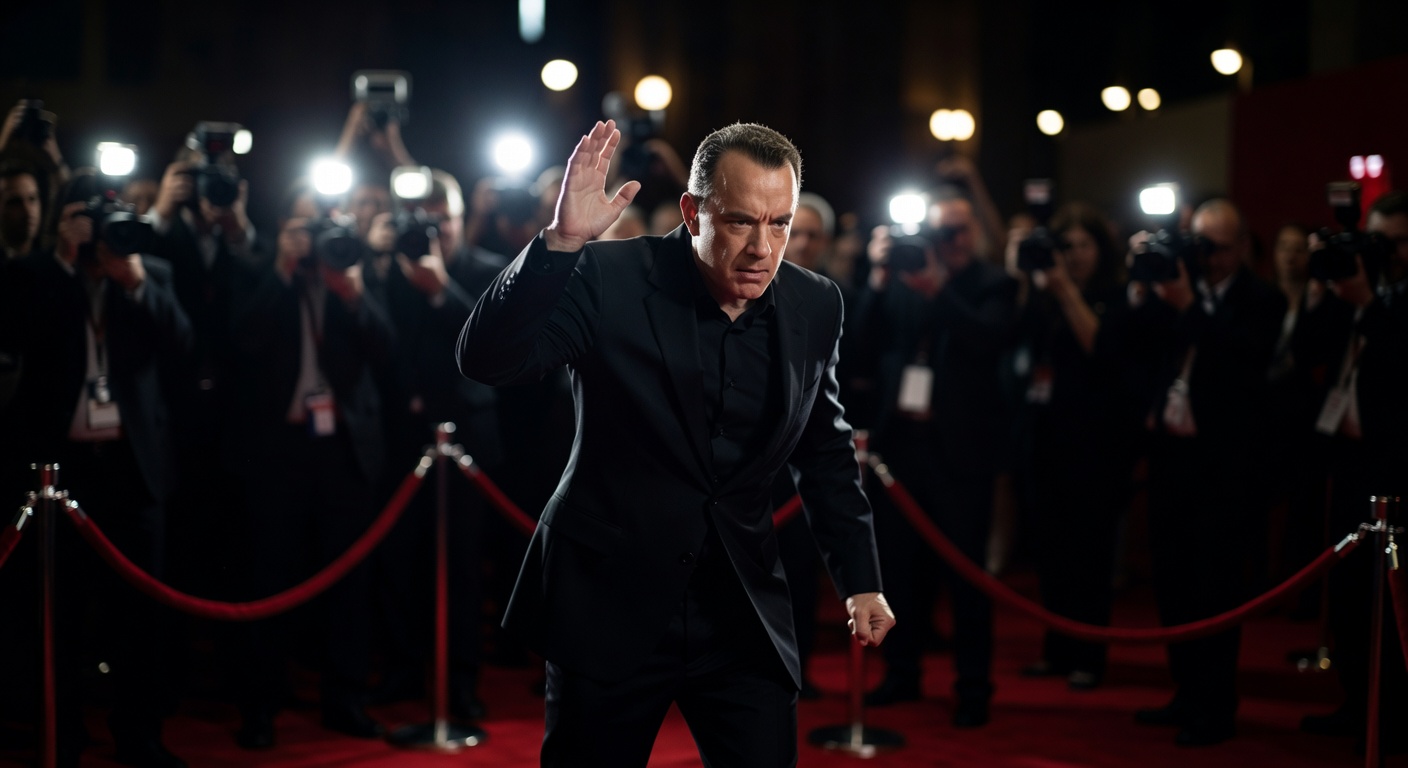
Hollywood has spent the last few years learning the same lesson over and over again, and somehow never actually learning it. Audiences do not like being insulted, lectured, or treated like political clay to be molded by rich celebrities who cannot stay in their lane. That is why this latest Tom Hanks controversy matters.
According to the claims now circulating, Hanks issued what was supposed to be a public apology after months of aggressive anti-Trump rhetoric and broader contempt toward a big chunk of the audience. But if the reported remarks are accurate, this was not a clean apology. It was the familiar Hollywood non-apology: “sorry, but also you’re too ignorant to understand why I’m right.”
What happened
The reported issue centers on a supposed statement from Hanks in which he apologized for pushing his politics too far, while at the same time doubling back into more partisan messaging. That is the key detail here. An actual apology takes responsibility. A manufactured apology tries to calm the room while still sneering at the people who left.
That is why so many people are reacting to this as humiliation rather than humility. The wording, as it has been described, does not sound reflective. It sounds like a celebrity being told to clean up a mess without actually changing his attitude.
It also arrives in a larger environment where corporate media and legacy entertainment brands are already taking heat from viewers who are exhausted by political sermonizing. The second audiences sense a studio note behind the curtain, the whole thing starts to smell fake.
Why it matters
The bigger problem for Hanks is not just the apology itself. It is timing.
When a major actor suddenly softens his tone right as a studio has a giant release to protect, people are going to connect the dots. Fair or not, the public tends to assume this is not about conscience. It is about box office. It is about brand management. It is about making sure a valuable franchise does not take collateral damage from one actor’s ego.
That is especially dangerous when family entertainment is involved. Audiences might tolerate a moody actor going off on politics in some prestige-drama lane. But if you are tied to a major nostalgic IP, families do not want the baggage. They do not want every trailer and press stop shadowed by another round of celebrity activism.
Once that association hardens, the studio has a problem. Not because one comment destroys a movie by itself, but because it adds to the sense that Hollywood cannot stop sabotaging its own product line with the personal obsessions of its stars.
The apology trap Hollywood keeps falling into
This is the part the industry still does not understand.
Viewers can forgive a lot. They can forgive arrogance, bad interviews, even the occasional dumb comment. What they do not forgive easily is being treated like idiots. And that is exactly what these reverse-apologies keep doing. The script is always the same: first comes the sad face, then the plea for grace, then the lecture, then the accusation that the public misunderstood everything.
No, they understood it.
They understood the contempt. They understood the smugness. They understood the assumption that actors are somehow moral authorities instead of highly paid performers who got addicted to hearing themselves talk.
That is why these apology tours rarely work. They are too polished, too strategic, too obviously built in a conference room. They are not about repairing trust. They are about stopping the bleeding.
The bigger pattern
This looks like part of a broader collapse in Hollywood’s confidence. The old model depended on stars being untouchable and audiences being passive. That model is gone. People can now reject the message, reject the messenger, and reject the studio all at once, in real time.
The result is an industry that seems trapped between two bad instincts. First, it cannot stop inserting politics where audiences did not ask for them. Second, once backlash hits, it cannot apologize without sounding manipulative. That is what happens when public relations replaces honesty.
And when studios get nervous, they do what studios always do: they try to sand down the rough edges without addressing the deeper rot. They want the audience back, but they do not want to admit the audience had a point.
Final take
If this reported Hanks apology is authentic, it may end up doing more damage than the original outbursts. Not because it is too harsh, but because it is too hollow. People know the difference between regret and image repair. They can smell it instantly.
Hollywood keeps acting shocked that fans walk away after being mocked, scolded, and then handed a fake olive branch. But that shock is the real performance. The audience is not confused. The audience is tired.
And if the industry wants trust back, it is going to need a lot more than one celebrity groveling halfway before snapping right back into the same old talking points.
Subscribe to Game Pilled: https://www.youtube.com/@GamePilledBlog
Join the Based New Wave!