The new Narnia movie has not even arrived yet, and it is already giving us the unmistakable feeling that somebody in a Hollywood conference room decided C.S. Lewis needed a little more “rock and roll.”
Empire has released the first images from Greta Gerwig’s adaptation of The Magician’s Nephew, along with confirmation that Meryl Streep will voice Aslan. Yes, Aslan. The lion. The Christ figure. The character traditionally associated with wisdom, sacrifice, authority, and the moral center of the entire series.
Apparently, the new plan is to make him sound like a woman and visually draw from David Bowie.
We like David Bowie. David Bowie was an incredible artist. David Bowie was also not Aslan.
The lion, the witch, and the gender-swapped Messiah
Gerwig described the casting as a search for someone older than 70 who could bring “wisdom of experience” while still having “the capacity of fresh wonder like a child.” That description sounds carefully engineered to avoid saying the obvious thing: Meryl Streep is playing a male character because the production wants the choice to become part of the conversation.
And it has.
Aslan is not just another fantasy character who can be reinterpreted without consequence. In Lewis’ books, the character’s identity is inseparable from what he represents. You can change surface details, but once you start changing the figure at the center of the story, you are no longer making a neutral adaptation choice.
You are making a statement about the story.
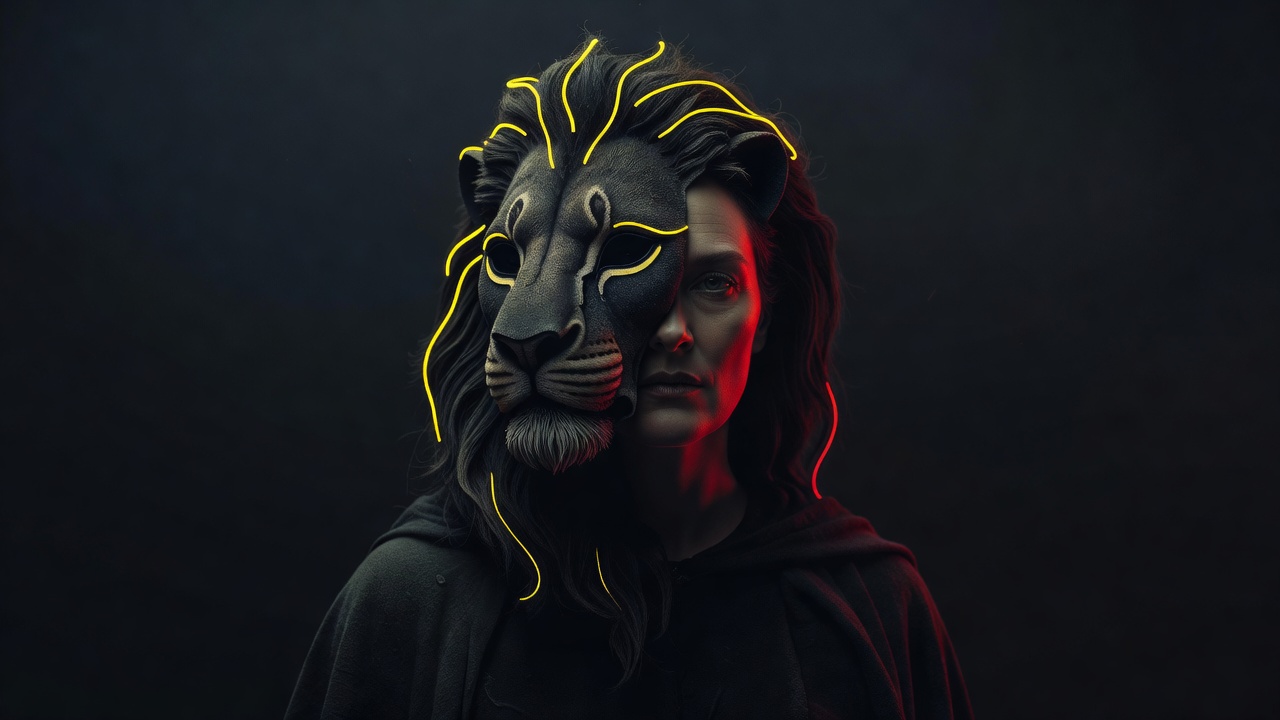
The early images are not exactly calming anyone down. Aslan reportedly features mismatched eyes and red markings inspired by Bowie. The whole presentation looks less like the solemn creator of Narnia and more like an extravagant rock-opera centerpiece waiting for a spotlight.
That may be intentional. Gerwig has repeatedly described the project as “rock and roll,” and The Magician’s Nephew does contain one of the most memorable scenes in the series: Aslan sings Narnia into existence.
That scene is already musical in the literal sense. It does not need to become a glam-rock spectacle with a celebrity vocal performance and a production design team trying to recreate Labyrinth.
This feels less like adaptation and more like correction
The concern is not that a filmmaker has a visual style. Greta Gerwig clearly has one. Little Women worked because it understood the emotional material it was adapting. Barbie worked because its heightened style matched the artificial world of the story.
But Narnia is not a blank canvas for whatever worked last time.
The fear is that this production will treat Lewis’ books as raw material for a modern ideological rewrite. The source material already contains themes that do not fit comfortably inside the current Hollywood template: moral absolutes, genuine evil, sacrifice, repentance, obedience, and the idea that not every villain is secretly a misunderstood victim.
That is probably why the story’s villains are such a concern here.
Modern adaptations love turning evil into trauma with good lighting. Jadis cannot simply be evil. The uncle cannot simply be a selfish and destructive man. Somebody has to explain the systems that made them this way, the oppression that shaped them, or the social forces that supposedly justify their choices.
The result is always the same. The villain becomes sympathetic, the hero becomes morally compromised, and the story’s original judgments get softened until nothing means very much.
The “rock and roll” warning sign
There is a difference between making Narnia feel alive and dragging it into the cultural mood of whatever era the production happens to be made in.
The story is set in a particular world with a particular moral vocabulary. If the adaptation keeps reaching for modern references, modern aesthetics, and modern social framing, the audience will notice that the movie is no longer asking what Lewis was trying to say.
It is asking what Greta Gerwig wants to say through Lewis.
That is the core problem with hiring a filmmaker based on what they did with another property and then expecting the same formula to work on a beloved fantasy series. Barbie had songs, bright colors, contemporary feminism, and a world built around performance and identity. Narnia has talking animals, magic, children, Christian allegory, and a cosmic battle between good and evil.
Those are not interchangeable ingredients.
The production may still turn out to be visually impressive. The cast is talented. The material is strong enough to survive a lot of bad decisions. But strong material is not indestructible, especially when the people adapting it seem eager to announce how much they intend to reshape it.
Why start with The Magician’s Nephew?
Netflix choosing The Magician’s Nephew as the starting point also raises questions.
The book is a prequel, but it was not the first story published. Most readers encountered Narnia through The Lion, the Witch and the Wardrobe, and that order gives the world its mystery. Starting with the creation of Narnia may be an attempt to build a new continuity from the ground up.
That also gives the filmmakers more room to establish their own version of the mythology before audiences reach the familiar stories.
If the first movie changes the tone, the theology, the villains, and the visual language, then every later installment will inherit those changes. By the time the story reaches the more recognizable material, the audience may be watching a Narnia that only shares names with Lewis’ books.
That is the real worry. Not one casting decision by itself, but the pattern around it.
Meryl Streep as Aslan. Bowie-inspired design. Rock-and-roll creation imagery. A filmmaker known for modern reinterpretations. A release strategy that reportedly moved the film away from the holiday season.
None of these choices proves the movie will be terrible. Together, they tell us what kind of movie the studio seems excited to make.
And it does not sound like the kind of Narnia many fans have been waiting for.
Final take
We do not need Narnia to be dragged into the present. Narnia already works because it speaks in permanent terms. Good and evil are real. Choices matter. Sacrifice means something. The world is bigger than the characters’ feelings about themselves.
If Netflix wants a fantasy musical with Bowie imagery and a radically revised mythology, it can make one. It just should not pretend that changing Aslan into a celebrity-driven symbol of fashionable reinvention is somehow a minor detail.
The lion is the point.
If the adaptation forgets that, no amount of spectacle will save it.
Subscribe to Game Pilled: https://www.youtube.com/@GamePilledBlog
Join the Based New Wave!