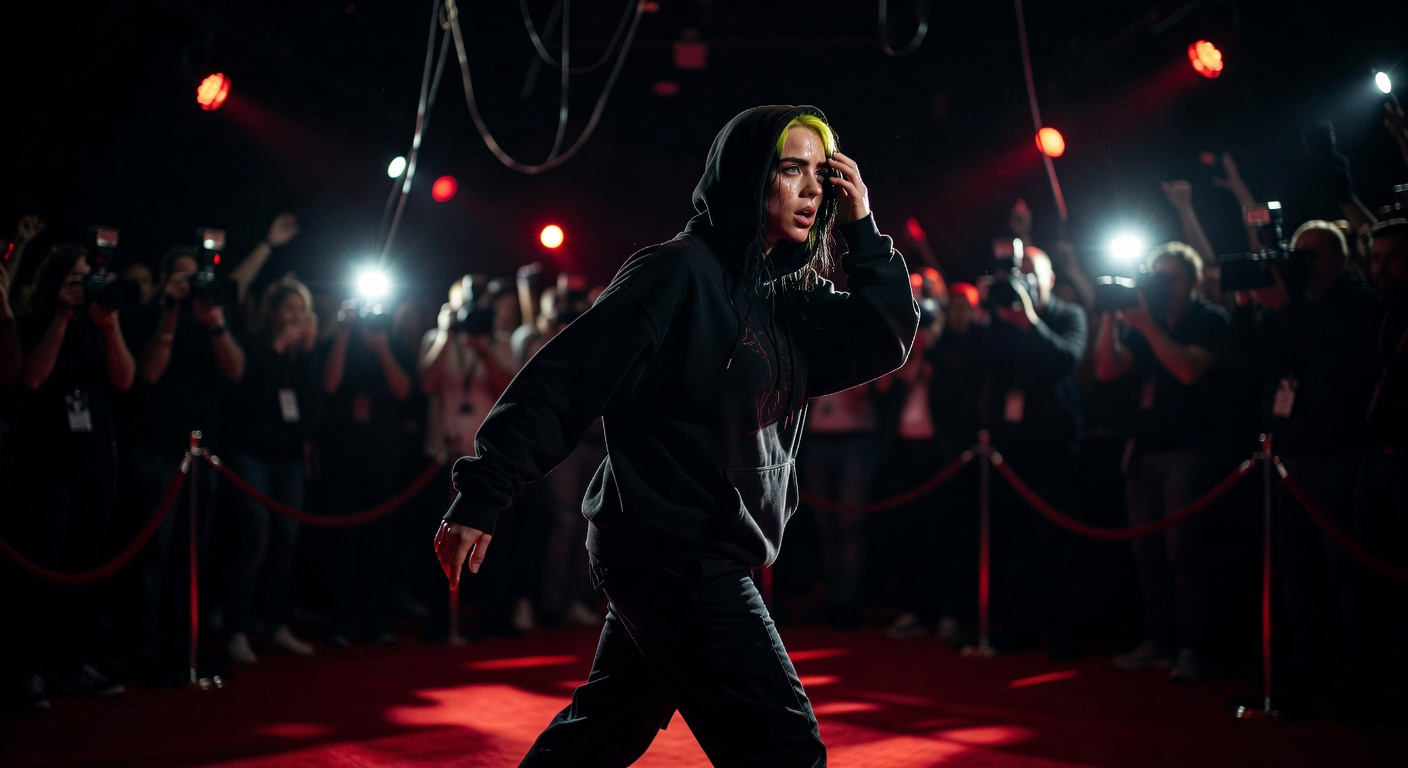
The story around Billie Eilish hasn’t cooled down since the 2026 Grammys. If anything, it has expanded from one viral comment into a full-on reputation fight touching music, politics, brand partnerships, and fan trust.
Here’s the key update: in widely circulated commentary clips and reposted statements, Eilish is described as preparing a politically themed written project for fans while also signaling deeper involvement in midterm-cycle political events. If that direction is accurate, this is no longer a one-week controversy. This becomes a long-cycle identity bet.
What happened
The flashpoint was Eilish’s Grammys-era “stolen land” remark, which triggered immediate online backlash across multiple audience segments. Since then, the conversation has broadened to include her brother Finneas, with critics arguing both artists have become increasingly political in public messaging.
In recent weeks, the narrative escalated again. Commentary channels claim Eilish has framed 2026 as a hostile environment for artists who share political opinions and is planning a book-like “exclusive read” to explain her perspective, emotional experience, and worldview to supporters. Those same reports also claim she intends to participate in Democratic National Committee-adjacent activity tied to upcoming midterm momentum.
Important caveat: some of these statements are circulating through creator transcripts and clips rather than formal, long-form press releases. So viewers should treat specific language as reported commentary unless and until it is confirmed in full through primary sources.
Why this is a risky move
From a pure audience strategy standpoint, doubling down politically after a major blowback moment is high risk.
When fans feel like entertainment is turning into a lecture, the relationship changes fast. People who came for songs, performance, and emotional connection can suddenly feel sorted into ideological camps. That’s usually where silent churn begins: fewer streams, fewer ticket conversions, weaker goodwill.
The bigger risk is commercial, not just social. Brand teams don’t buy controversy unless controversy is the brand. For mainstream campaigns, they buy stability, broad appeal, and low volatility. Once an artist becomes “high temperature,” partners start backing away, delaying, or quietly replacing placements. Whether every rumored deal loss is verifiable or not, the market behavior pattern is familiar.
Reporting vs interpretation
Let’s separate what’s being said from what it means.
Reported in circulating commentary:
- Eilish is allegedly developing a personal-political written project.
- She may align more openly with partisan organizing/events.
- She continues to defend politically charged public speech.
My interpretation:
This looks like an attempted narrative reset — shifting from reactive social media damage control to a controlled, long-form “here is who I am” positioning play. In theory, that can solidify a core fan base. In practice, it often narrows total audience and hardens opposition at the same time.
That’s the paradox: core supporters get louder, casual listeners get quieter, and industry partners get cautious.
The Hollywood pattern nobody wants to admit
I’ve spent enough time around entertainment machinery to recognize this cycle.
- Viral statement detonates.
- Team underestimates durability of backlash.
- Public posture becomes defiant instead of clarifying.
- Political alignment becomes central brand identity.
- Market punishes fragmentation — slowly, then all at once.
This doesn’t just hit one artist. It contributes to a broader trust erosion in the celebrity system. Audiences are already fatigued. Award shows are struggling for cultural gravity. Viewers increasingly reject being managed, instructed, or morally graded by people they once followed for craft.
And that’s where this story connects to the larger Game Pilled thesis: audiences are not “uninformed” because they disagree. They’re exhausted by institutions that confuse influence with authority.
What to watch next
If you want signal instead of noise, track these indicators over the next 90 days:
- Official confirmation of the reported written project and its framing.
- Event participation tied to midterms or partisan platforms.
- Commercial movement (new partnerships vs quiet exits).
- Engagement quality (not just total likes, but sentiment split and fan retention behavior).
- Music-first vs message-first balance in upcoming promotional cycles.
If this becomes message-first, the divide likely deepens. If the team re-centers on music, craft, and universal themes, there’s still a path to stabilization.
Final take
This is no longer about one Grammys quote. It’s about whether a global pop artist can convert backlash into a durable political identity without collapsing her mainstream center. That is a hard game, and very few pull it off.
Because in the end, fans don’t reward being talked at. They reward being moved.
Intro/Outro music credit: Mike Zeroh
Animated intro design credit: https://www.youtube.com/user/w0r3xDCze