It’s March 2026, and the backlash cycle around Billie Eilish keeps accelerating instead of cooling off. The political controversy was already hot after the Grammys “stolen land” moment and the anti-ICE blowback. But now, the conversation has shifted from public statements to private behavior — specifically, how she reportedly handled producers during the final stage of a high-stakes Macy’s commercial shoot.
And if you’re a brand executive watching this play out, this is where things go from “PR headache” to “do-not-renew list.”
What happened
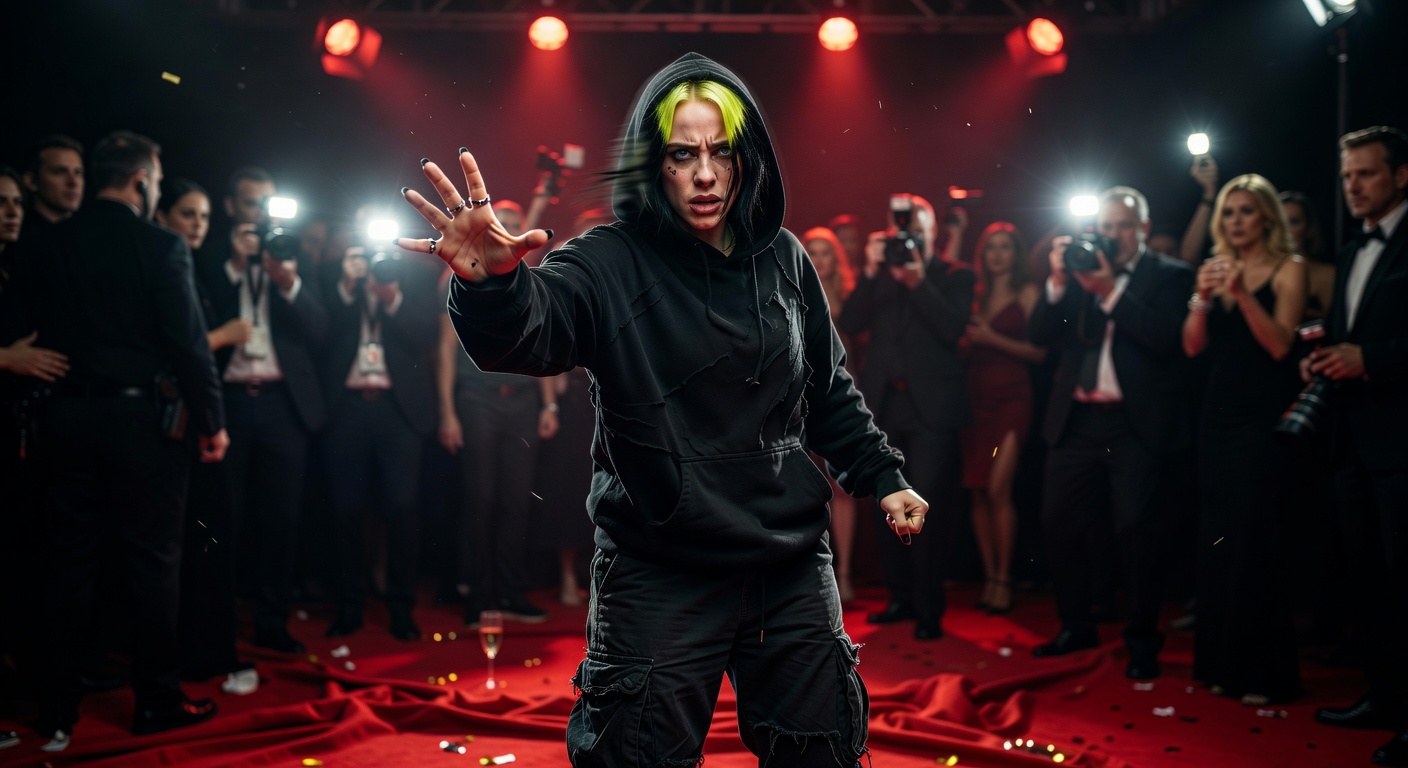
According to reports tied to the production, tensions exploded during a staged performance sequence for a remixed “Birds of a Feather” segment filmed on a flower-field set constructed inside a studio. Producers allegedly wanted to wrap after multiple takes due to schedule and budget pressure. Billie allegedly demanded more takes to perfect dance and lip-sync moments.
That disagreement apparently escalated fast.
The bigger flashpoint, according to the same account, was Billie’s insistence on bringing Finneas into a sequence where producers wanted to stick to the approved layout and director’s plan. Multiple producers reportedly pushed back. Billie reportedly screamed at them. The day’s shoot was allegedly canceled, and money was burned.
Important caveat: these details are still in the “reported” lane, not courtroom-certified fact. But even as allegations, they’re damaging because they line up with the current narrative around her: difficult, political, and increasingly expensive for brands to manage.
Why it matters
Brand partnerships run on one currency above all: reliability.
A campaign can survive mediocre creative. It cannot survive chaos on set.
If Macy’s (or any major retailer) believes a talent is unpredictable under pressure, the relationship ends quietly and permanently. That’s reportedly where this is headed — not just reduced collaboration, but a full freeze on future work involving Billie and possibly Finneas as a package.
That matters because commercial work isn’t side money anymore. It’s ecosystem money. It supports release cycles, merch timing, audience reach, and reputational crossover into mainstream spaces that don’t live on stan Twitter. Lose that, and everything gets narrower.
The politics-to-production pipeline
Here’s the part people keep pretending isn’t real: public posture and on-set behavior are now fused.
When an artist is already polarizing a chunk of the audience politically, every behind-the-scenes conflict gets interpreted through that lens. Fair or unfair, that’s the game now. The margin for error disappears.
So if Billie was already taking fire for statements that alienated part of her fan base, then a reported set meltdown doesn’t land as an isolated moment. It lands as confirmation. Studios, sponsors, and exec teams don’t ask, “Was this one day misunderstood?” They ask, “Can we afford this risk for the next 18 months?”
That’s where careers turn.
The movie pressure cooker
This story also arrives as Hit Me Hard and Soft (film tie-in version) approaches release, reportedly linked to major promotional and merchandising plans. If your promo stack includes a retail campaign and that campaign implodes during production, the movie team feels it immediately.
Paramount-level pressure, brand pressure, director pressure — it all compounds.
And yes, James Cameron’s name being attached to a high-visibility release means the tolerance for drama is even lower. Big directors and big studios can absorb controversy, but they hate unpredictability. Everyone in that chain wants one thing: controlled rollout, clean message, no side circus.
Right now, that doesn’t look like what they’re getting.
The Finneas factor nobody wants to discuss
Another uncomfortable truth: when sibling duos operate as a locked unit, conflict contagion is real.
If one person clashes with producers and the other jumps in by attacking the production team, executives don’t separate those incidents in their heads. They log it as one management problem with two names attached.
That can hurt leverage in negotiations, not just for one campaign, but across labels, partnerships, festival bookings, and future cross-media projects. In entertainment, word travels faster than contracts.
Final take
I’m not interested in fake outrage for clicks. I’m interested in pattern recognition.
If these reports are even directionally accurate, this isn’t “Billie had a rough day.” This is what happens when political overreach, public defiance, and production conflict collide at the same time. You can survive one. You can maybe survive two. Three at once starts to look like self-sabotage.
Billie still has enormous talent. That isn’t the question.
The question is whether her team can rebuild trust with the people who finance, schedule, and distribute the machine around that talent — before the machine decides it no longer needs her.
Because once major brands and studios start quietly crossing your name off the board, comebacks get very expensive, very fast.