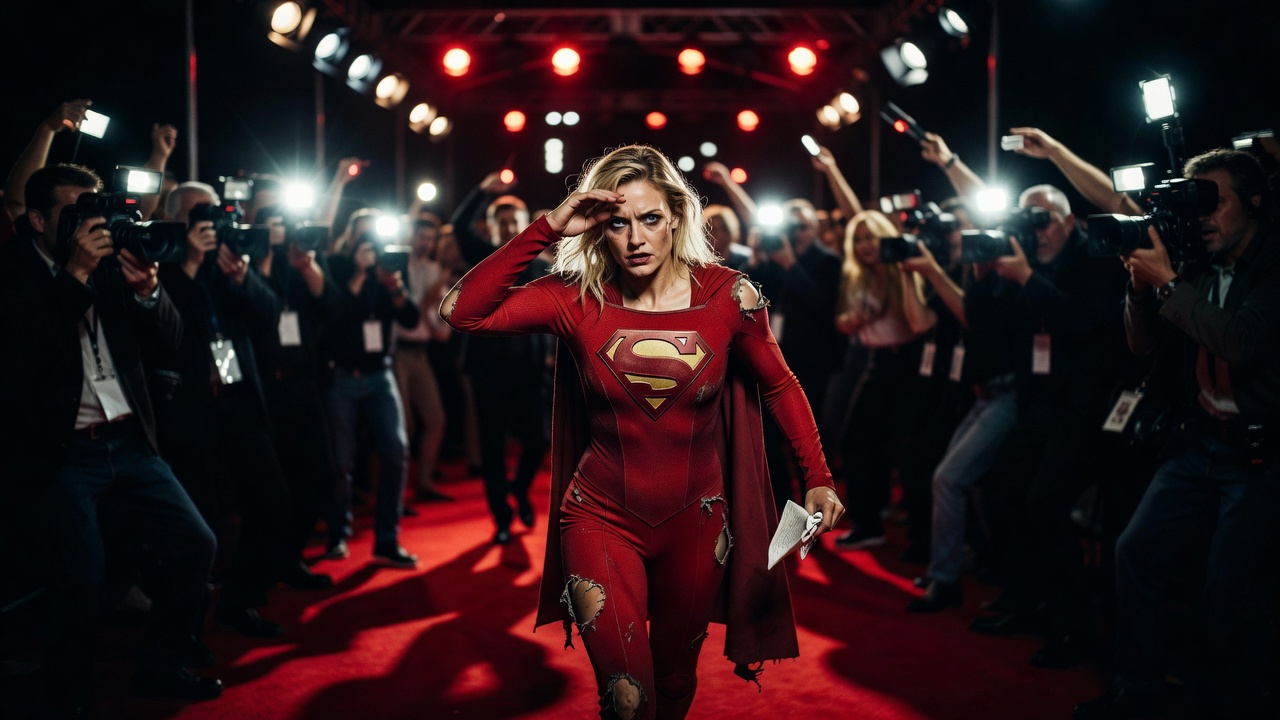
If the latest promotional appearance is any indication, Warner Bros. and DC Studios are deep in the damage-control phase of Supergirl. According to the transcript making the rounds, writer Ana Nogueira became emotional onstage while defending the film, its message, and the backlash surrounding it. Whether you see that moment as sincere, strategic, or both, it points to the same ugly reality: this movie is not being discussed like a winner.
From where I sit, the biggest problem was never some grand coordinated campaign against the film. It was disinterest. That's the part studio people never want to hear. Audiences don't need a manifesto to reject a movie. Sometimes they just don't care enough to buy a ticket.
That seems to be what happened here. The marketing never made Supergirl feel essential. It didn't feel like an event. It didn't feel like something people had to see on opening weekend. And once that weak opening impression collided with mixed reactions to the story itself, the runway disappeared fast.
If the transcript is accurate, Nogueira framed much of the criticism as sexism, misogyny, and hostility toward female-led superhero stories. I don't doubt that some of that exists online, because of course it does. The internet is full of people who confuse being obnoxious with being insightful. But blaming the loudest trolls for a broad audience rejection is a convenient dodge. It lets the studio avoid the harder question: what if people simply didn't like the movie?
That's where this whole thing starts to wobble.
When a film misses this badly, the script comes under the microscope. Fair or not, writers get hit first when the audience decides the story didn't land. And if Nogueira is still attached to Wonder Woman, that becomes the next conversation immediately. Not because every criticism is valid, and not because outrage merchants are suddenly honest brokers, but because failure always spills forward in Hollywood. A bomb doesn't stay contained to one title. It infects the next one.
What also jumps out at me is the timing. The push for the digital release on July 28, 2026 feels less like a victory lap and more like a salvage operation. Studios love to pretend digital is some magical second life. Sometimes it is. Most of the time, it's just where the spin continues after the theatrical story has already been written.
And the story here looks rough.
The more DC figures talk, the worse it gets. Every extra explanation makes the movie sound weaker. Every emotional defense invites another round of scrutiny. Every attempt to reframe audience rejection as moral failure on the part of critics only hardens the backlash. That's not how you rebuild trust. That's how you convince people they were right to tune out in the first place.
I think that's what makes this so telling for James Gunn's DC era. A healthy franchise can survive one miss. A shaky franchise starts narrating its own panic in public. That's what this feels like now: public panic, dressed up as advocacy.
If DC wants out of this hole, it needs fewer speeches, fewer excuses, and much better movies. The audience isn't confused. The audience isn't waiting to be scolded into compliance. The audience made a choice.
And right now, that choice looks like rejection.
⚠️ 🛠️ show ~/.openclaw/workspace-penzi/SOUL.md (agent) failed