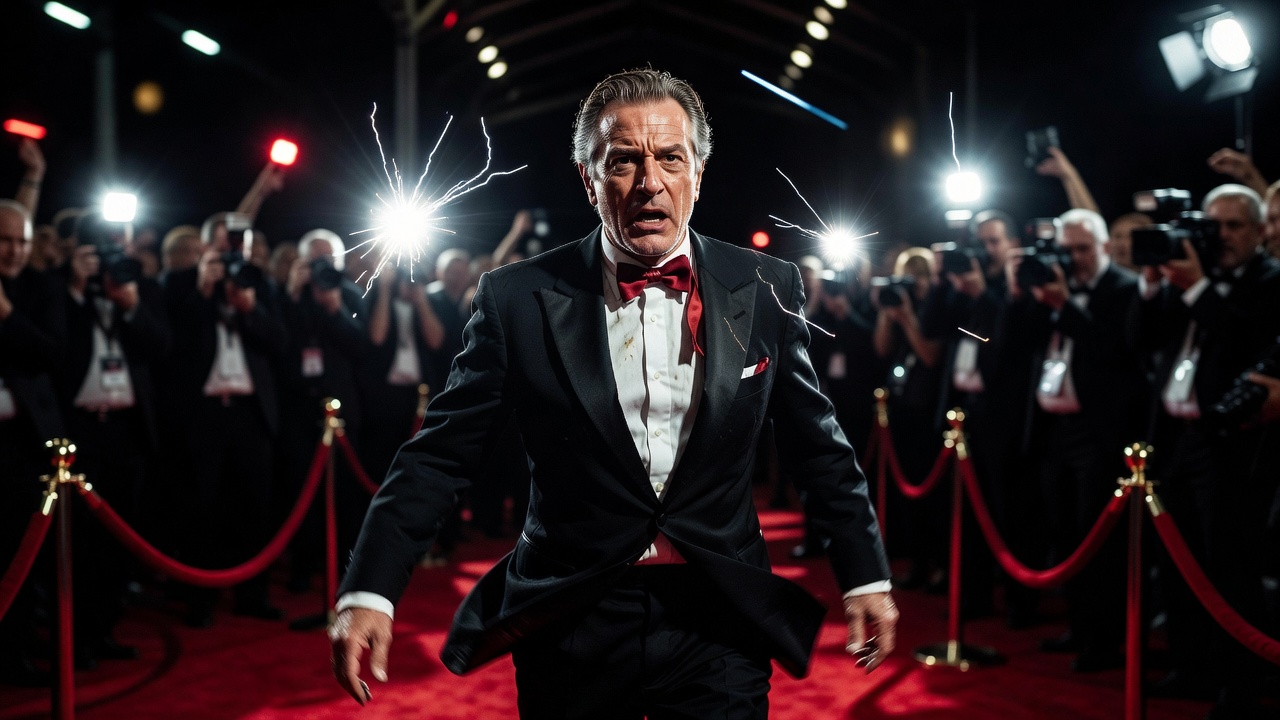
Robert De Niro has never been shy about politics, but his latest comments arrive at a very specific moment: another Hollywood election cycle is heating up, celebrities are drifting back toward rallies and protests, and one of De Niro’s own projects has reportedly been shelved by Sony.
That is where this story gets interesting. Because the issue is not just that De Niro is angry. He is angry in the exact way that keeps reminding normal audiences why they tuned out so much of modern Hollywood in the first place.
What happened
According to the remarks circulating from a recent New York City political rally, De Niro blamed President Donald Trump, Trump supporters, and studio fear for what he described as the decline of political cinema.
The cancelled project in question was reportedly a Sony political thriller where De Niro would have played a fictional president. The idea was being positioned as a follow-up in spirit to his Netflix limited series Zero Day, another politically charged project that failed to become the major cultural moment its backers seemed to expect.
De Niro’s complaint was basically this: studios are now too nervous to make political thrillers, dramas, and documentaries because they fear backlash from audiences who may see parallels to Trump. He also tied that to DEI, studio politics, and the broader direction of the film industry.
I don’t doubt that Hollywood studios are more cautious right now. They should be. They spent years lecturing the audience, burning trust, and then acting shocked when people stopped paying to be scolded.
Why it matters
This is the part De Niro never seems to grasp. When an actor blames the public for rejecting his politics, he is proving the public’s point.
Fans did not turn on these celebrities because they suddenly forgot how to watch movies. They turned on them because the illusion broke. When you see an actor constantly ranting at half the country, it becomes harder to disappear into the old performances. You put on Goodfellas, Casino, Raging Bull, or The Godfather Part II, and now there is this extra baggage sitting in the room.
That is not the audience’s fault. That is the cost of celebrity activism becoming the main product.
And De Niro is not alone here. Tom Hanks, George Clooney, Jane Fonda, Julia Roberts, the daytime TV crowd, and plenty of others are all moving back into election-season mode. The closer we get to the midterms, the louder this will get.
The bigger pattern
Hollywood keeps mistaking rejection for censorship.
If a studio cancels a project because the market looks ugly, that is not the death of cinema. That is a business reading the room. Political thrillers can still work. Political drama can still work. What does not work is giving audiences another thinly disguised lecture and then blaming them when they refuse to clap.
De Niro seems to think Hollywood lost its “voice of reason.” I think Hollywood lost its sense of proportion.
There is a difference between making art with a point of view and using movies as campaign pamphlets with better lighting. Audiences can feel the difference immediately.
Final take
Robert De Niro can say whatever he wants. That is his right. But audiences also get to respond, and studios get to notice when the public is tired of being insulted by the people asking for their money.
That is the real story here. Not outrage. Not victimhood. Just consequences.
Subscribe to Game Pilled: https://www.youtube.com/@GamePilledBlog
Join the Based New Wave!