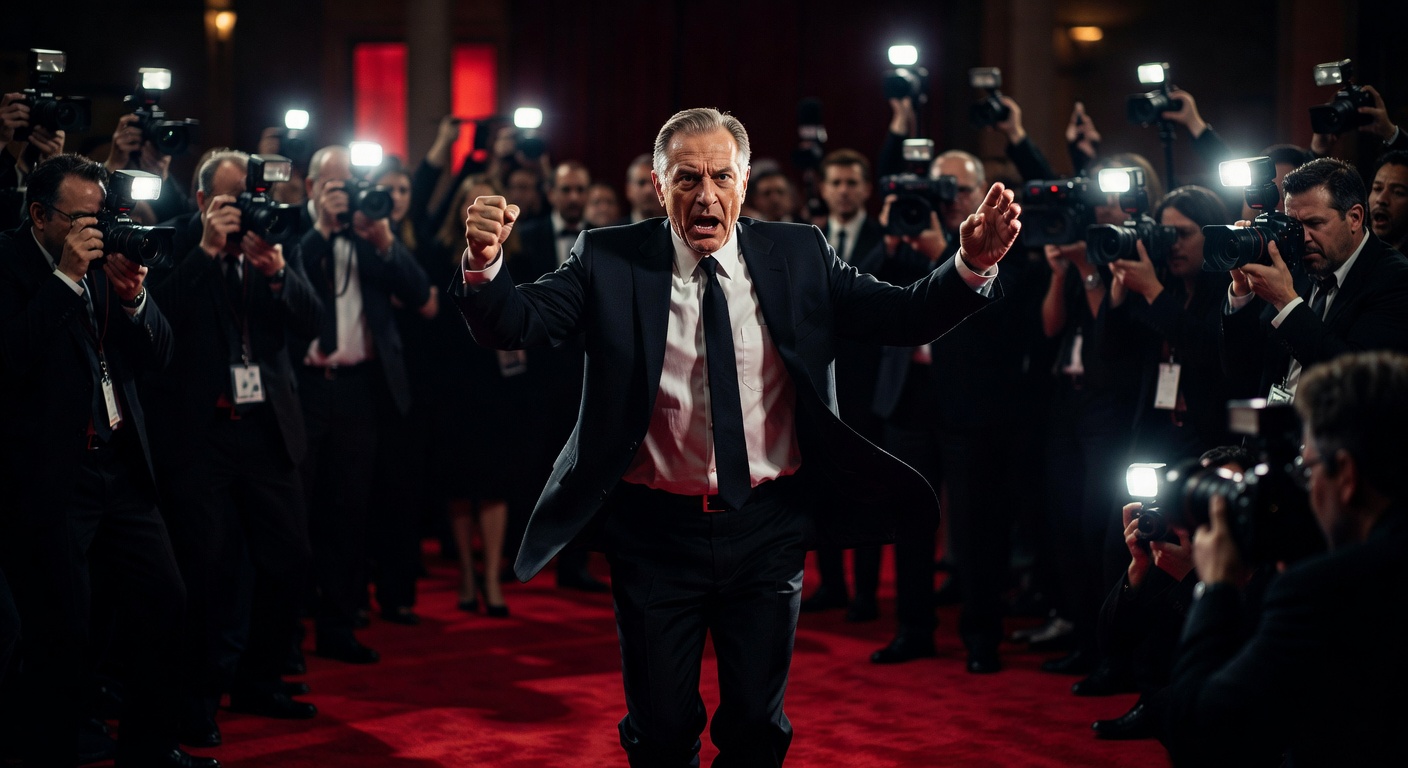
I've been around show business long enough to recognize the difference between timing, instinct, and plain old vanity. What we're watching right now with Robert De Niro and Jimmy Kimmel is not courage. It's not wit. And it sure isn't moral clarity. It's Hollywood doing what Hollywood does when it panics: turning a volatile political moment into another excuse to perform for itself.
In the aftermath of the reported chaos surrounding the White House Correspondents' Dinner and the broader backlash tied to Jimmy Kimmel's recent Melania Trump joke, De Niro decided to jump back into the ring with another anti-Trump tirade. At this point, nobody should be surprised. The man seems physically incapable of letting any national controversy pass without making himself part of the headline.
What makes this one especially ugly is the timing.
If you're responding to a moment where people are already on edge, where rhetoric is under a microscope, where the country is clearly sick of elites treating everything like content, maybe the smart move is to lower the temperature. Instead, De Niro reportedly chose to defend Kimmel, attack Trump again, and frame the whole situation as some free-speech crisis because Trump wanted Kimmel fired over that joke.
Let's be honest about the joke. Calling Melania Trump something like an "expectant widow" is not fearless comedy. It's not sharp satire. It's cheap, creepy, and weird. That's why the backlash landed. Kimmel didn't get heat because the public suddenly forgot how comedy works. He got heat because a lot of people, including some of his own audience, thought he crossed a line and then tried to squirm out of it afterward.
That's the part Hollywood never seems to understand. The public is not required to laugh. Viewers are not obligated to applaud because a celebrity says "it was just a joke." If a joke bombs morally as well as comedically, people get to say so. That's not censorship. That's called having an audience.
And then here comes De Niro, wrapping Kimmel in the language of artistic freedom, as if ABC viewers are goose-stepping toward dictatorship because they don't want sanctimonious late-night hosts insulting first ladies and hiding behind the word "comedy." Please.
The real story here is how reflexive this has become. A crisis happens, a celebrity opens his mouth, Trump becomes the center of the speech, and suddenly the conversation shifts away from judgment, taste, and accountability. That's the hustle. That's the script. And De Niro knows it by heart.
I also think this tells you how insulated these people are. They still believe the public sees them as brave truth-tellers. In reality, more and more people see pampered performers lecturing from inside a shrinking cultural bubble. When De Niro backs Kimmel after a joke like that, he isn't defending comedy. He's defending the club.
And that's why the backlash matters.
It isn't just about Jimmy Kimmel. It's about a public that is exhausted by celebrities who politicize every tragedy, every scare, every controversy, and then act shocked when people resent it. De Niro can rant all he wants. Kimmel can explain all he wants. But neither one gets to decide how the audience is supposed to feel.
Hollywood keeps mistaking applause from its own table for approval from the country. That's the real punchline.